
Feature Wall Selection
We help choose the wall based on room layout, lighting, visibility and furniture placement.
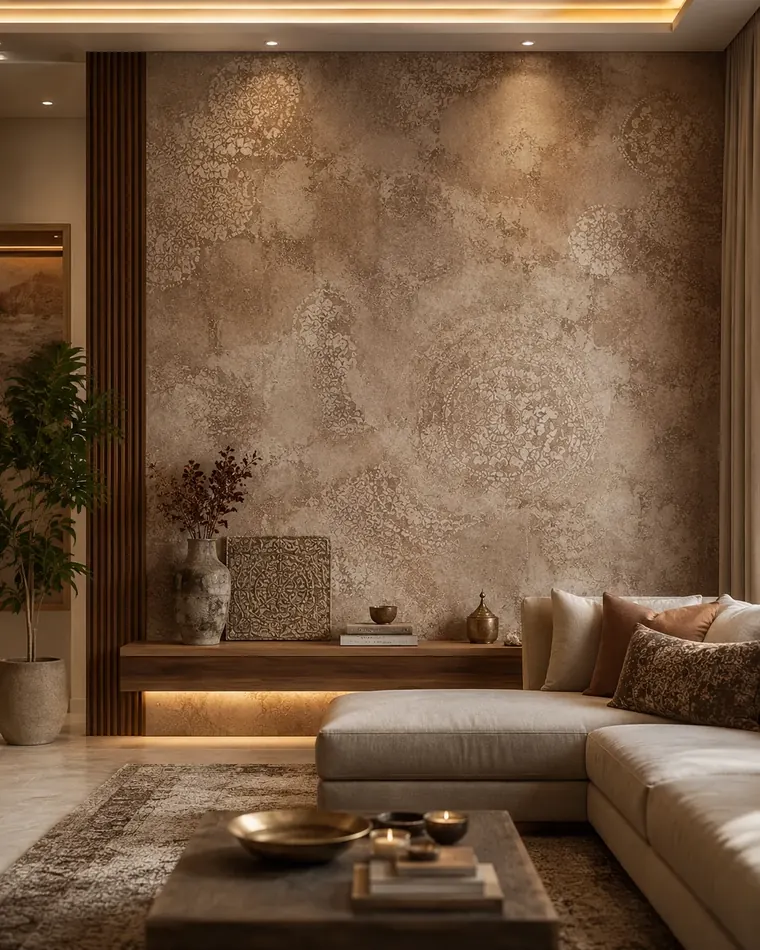
Texture and Asian Paints Royale Play painting for Hyderabad interior feature walls, planned with wall preparation, pattern scale, lighting, furniture direction and controlled decorative application.
Service Overview
Texture painting works best when the wall, room scale and lighting are considered together. Red Home Services helps plan suitable decorative finishes for feature walls and selected spaces while keeping the overall room balanced.
We help choose the wall based on room layout, lighting, visibility and furniture placement.
The finish is planned to look premium without overpowering the room.
Repairs, levelling and primer are considered before decorative texture application.
Exterior-Specific Guidance
Exterior walls need a different system from an indoor Royale Play or decorative feature wall. Rain, UV exposure, cracks, substrate movement and the protective exterior topcoat must be assessed before the texture profile is selected.
Material Guidance
For warm, natural feature walls where a subtle directional pattern complements living or dining spaces.
For layered, sand-inspired movement where lighting and colour variation are planned before application.
For artistic feature walls where the base condition, technique and pattern scale must be matched to the room.
For higher-impact feature walls where metallic reflection, lighting and surrounding furniture colours are carefully coordinated.
Common Issues We Address
Texture painting can help create a stronger feature wall without changing the entire room aesthetic.
We first review whether the wall needs levelling or repair so the texture finish sits better on the surface.
We guide finish direction based on the room, furniture style, lighting and maintenance expectations.
Execution is planned carefully so the decorative wall still feels elegant, clean and visually controlled.
How It Works
We inspect the wall, lighting, furniture direction and desired design impact.
Required repair, levelling, sanding and primer are completed before the texture finish.
The chosen pattern or effect is applied with controlled technique and edge detailing.
The completed feature wall is checked for pattern balance and overall room fit.
Book a Free Visit
Book a free site visit or design discussion to choose a suitable texture finish and plan the right wall preparation before execution.
Available Across Hyderabad
We arrange texture painting site visits across Gachibowli, Manikonda, Kokapet, Narsingi, Tellapur, Tolichowki, Bandlaguda Jagir, Lingampally, Financial District and nearby Hyderabad areas. For shared planning standards, see Hyderabad painting cost guide.
Local Work Evidence
For completed texture painting work, Red Home Services records the property type and locality, selected feature wall, base condition, approved Asian Paints Royale Play design and material, colour direction, execution stages, approximate duration and final handover. Customer-specific details are published only with permission.
We document wall size, furniture alignment, natural and artificial light, repairs, levelling needs, pattern scale and the approved visual direction.
The approved primer, base coat, Royale Play material, design or effect, colour combination and application sequence are recorded before execution.
Final review covers consistency, transitions, corners, surrounding paint, cleanup and approved completion photographs or feedback where permission is available.
No customer name, exact address, private photograph, review or completion claim is published without approval. View the verified Google Business Profile and published reviews →
Frequently Asked Questions
Expert guidance on feature-wall selection, samples, substrate preparation, cracks, lighting, colour, cleanability, repair, repainting, cost and finish approval.
Texture painting uses specialised material and tools to create visible relief, movement or pattern on the wall. Normal emulsion mainly provides colour and sheen. Texture work requires design selection, mock-up approval and more controlled application because the hand-created pattern is part of the final result.
A focal wall visible from the main entry or seating area usually works well. The design should account for room size, lighting, furniture, TV units and wall width. Using texture on every wall can make some interiors feel visually heavy.
It may visually soften minor undulations, but it should not be used to conceal active dampness, loose plaster or moving cracks. Those defects must be diagnosed and repaired first; otherwise they can reappear through the decorative finish.
The wall should be dry, sound and clean. Loose paint is removed, defects repaired and the base levelled to the degree required by the selected pattern. Primer and base coat are chosen as part of the texture system, not as optional afterthoughts.
Yes, if the old coating has good adhesion and is compatible after cleaning and preparation. Glossy, weak, damp or heavily uneven surfaces may require sanding, removal, repair or a suitable bonding layer before texture work.
Texture appearance varies with tool movement, material thickness, colour, lighting and applicator technique. A sample establishes the pattern scale, direction, depth and topcoat effect. It is more reliable than approving only a catalogue photo.
Not exactly. Hand-applied textures naturally have controlled variation, and photographs are affected by lighting and editing. The aim is to match the approved pattern language and finish standard rather than reproduce every mark identically.
Side lighting creates stronger shadows and makes relief appear deeper, while flat frontal lighting can make the same pattern look softer. The wall should be reviewed under the actual daylight and evening lights before finalising depth and sheen.
Colour should support the pattern and room palette. Lighter monochromatic finishes highlight relief subtly, while metallic or contrasting effects create a stronger feature. Dark finishes can show dust, touch marks and surface variation more clearly.
Cleanability depends on the material, topcoat, depth and cure. Deep relief holds more dust and is harder to wipe than a low-relief finish. Cleaning guidance should be confirmed for the selected system, and abrasive scrubbing should be avoided.
Yes, when scale and colour are controlled. A restrained pattern on one wall can add depth without overwhelming the room. Very coarse textures, high contrast or multiple textured walls may be unsuitable for compact spaces.
Only products designed for exterior exposure should be considered outdoors. The system must account for UV, rain, substrate movement and water entry. An interior decorative texture should not be assumed suitable for a facade.
The programme includes preparation, primer or base coat, texture application, drying and any colour or protective topcoat. Complex patterns, large walls and sample approval take longer than standard painting. Adequate drying between stages is essential.
Cost depends on wall area, pattern complexity, material consumption, number of layers, base preparation, colour effects, height and access. Detailed hand-worked finishes are priced differently from simple roller textures even when the area is the same.
Small repairs may be blended, but an exact invisible match is not always possible because the original pattern was hand-created and may have aged. Sometimes a larger controlled area or the full panel needs refinishing for consistency.
Yes. Repainting can refresh colour, but changing to a smooth wall may require scraping, sanding, levelling and new undercoats. Deep textures need more effort to remove or flatten than subtle textures.
It should identify the wall, approved pattern, sample reference, preparation, primer and base coat, texture product or category, colour effect, topcoat, access, timeline and repair limitations. This avoids disagreement over pattern depth and finish.
Review pattern continuity, edges, corners, unintended ridges, colour consistency, repaired areas and cleanliness. Inspect under both daylight and evening lighting, because shadows can reveal overlaps or uneven application that are not visible in flat light.
Get in touch
Review the wall, finish reference, colour direction and preparation needed for a clean decorative result.
GGoogle Business ProfileLocation, reviews and business informationView profile →