
Coating adhesion
Chalking, flaking and weak previous paint determine how much cleaning, scraping and primer work is required.
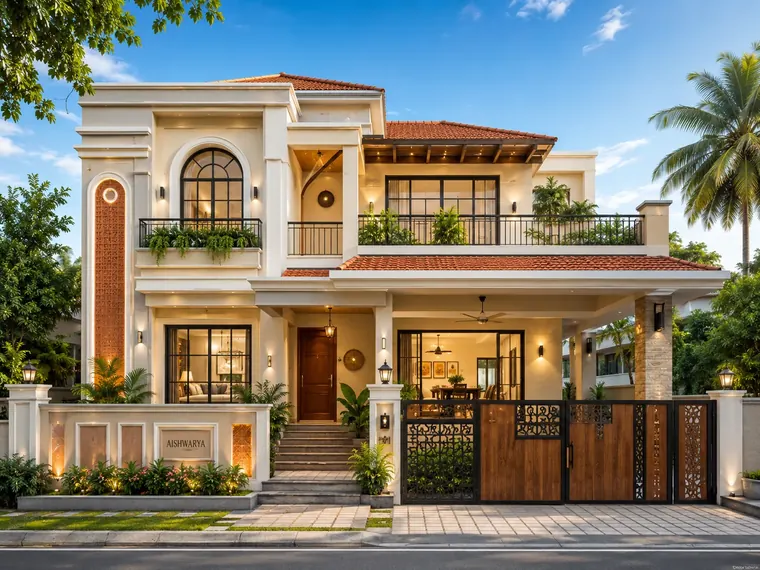
Exterior house painting and exterior texture for Hyderabad homes, villas and building facades, planned with surface inspection, crack review, preparation, access planning and suitable weather-resistant coatings.
Read the Building Exterior
An exterior repaint is not only a colour change. The coating system depends on the condition of the old paint, sun and rain exposure, cracks, parapet details, joints and places where water repeatedly reaches the facade.
Chalking, flaking and weak previous paint determine how much cleaning, scraping and primer work is required.
Hairline cracks, construction joints and repaired patches are checked so they are not simply hidden under colour coats.
Fully exposed elevations, shaded walls, parapets and horizontal bands can need different preparation or coating attention.
Height, neighbouring property, plants, windows and movement around the building affect the execution plan and quotation.
Choose by Exposure
The most expensive coating is not automatically the correct one. Surface stability, water exposure and repair needs should determine the specification first.
Where the previous coating is stable and exposure is moderate, cleaning, local repairs and a suitable exterior emulsion may be adequate.
Sun, rain and repeated wetting can justify a more robust exterior coating system after proper surface preparation.
Horizontal bands, top edges and projecting elements need careful review because water can sit or travel differently at these points.
Old patches, cement repairs and different base materials may require local primer or correction before the final facade coats.
The final product range, coat count and repair scope are confirmed after inspection. Exterior paint and waterproofing are related but not interchangeable; active leakage may require a separate waterproofing solution.
Exterior Texture + Protective Finish
Exterior texture is planned as part of a complete facade coating system. The wall condition, crack repairs, exposure, texture profile, compatible primer and weather-resistant topcoat are reviewed together before work starts.
Sound plaster or repaired render is checked for stability before the compatible base, approved texture sample and protective exterior coats are applied.
Dirt, algae, loose ridges, cracks and weak coating are reviewed first. Local texture matching may be possible, but broader refinishing can be needed for an even elevation.
Texture can be limited to selected facade zones so the pattern complements the elevation without making every exterior wall visually heavy.
Parapets, projections, cracks and recurring wet areas are checked separately because texture and exterior paint do not replace treatment for active leakage.
Exterior texture can add depth and help unify repaired facade areas, but it is not a waterproofing treatment. Where dampness or rain entry is active, review the appropriate Hyderabad waterproofing service before final texture and paint coats.
Looking for indoor decorative finishes? Explore our interior texture and Royale Play painting services.
Facade Warning Signs
A new colour coat can look fresh initially but fail early when the underlying cause of weak paint or water exposure is ignored.
Loose material and powdery residue should be removed so the new system can bond to a stable base.
Cracks are reviewed by location and pattern before a suitable filling or repair approach is selected.
Cleaning is planned before painting, especially on shaded or repeatedly damp exterior surfaces.
These details are checked separately because exterior paint alone may not solve an active water-entry point.
Execution Roadmap
We note weak coating, cracks, algae, parapets, joints, access limitations and areas of repeated water exposure.
The quotation identifies cleaning, scraping, crack or patch correction, primer needs and the selected finish system.
Surfaces are cleaned and repaired before primer, approved exterior texture where included, and weather-resistant finish coats are applied according to the agreed scope.
Completed elevations and vulnerable edges are visually reviewed before access equipment and work areas are cleared.
Book a Free Visit
Book a free site visit to review the facade, crack areas, access conditions and coating options before finalising work.
Available Across Hyderabad
We arrange exterior painting site visits across Gachibowli, Manikonda, Kokapet, Narsingi, Tellapur, Tolichowki, Bandlaguda Jagir, Lingampally, Financial District and nearby Hyderabad areas. For shared planning standards, see Hyderabad painting cost guide.
Local Work Evidence
For completed exterior painting work, Red Home Services records the property type and locality, facade condition, cracks and weak coating, approved preparation, coating system, access method, approximate duration and final handover. Project-specific details are published only with permission.
We document sun and rain exposure, loose coating, cracks, parapet and joint conditions, height, scaffolding or ladder access and nearby surfaces requiring protection.
The agreed cleaning, scraping, crack treatment, primer and exterior finish system is recorded with the access and curing sequence used on site.
Final review includes uniform coverage, repaired cracks, junctions, drips, cleanup and approved completion photographs or feedback where permission is available.
No customer name, exact address, private photograph, review or completion claim is published without approval. View the verified Google Business Profile and published reviews →
Frequently Asked Questions
Expert answers on facade inspection, cracks, seepage, primer, weather windows, access safety, coating selection, cost, durability and maintenance.
The facade should be checked for loose or chalky paint, cracks, damp patches, algae, exposed plaster, failed sealants, parapet details, drainage issues and access constraints. A coating system should be selected only after the surface condition and water-entry risks are understood.
Exterior coatings face sunlight, rain, pollution and temperature movement. New paint cannot compensate for weak plaster, dust, loose old coating or untreated cracks. Cleaning, removal of unsound material, repair and compatible primer are the foundation of long-term adhesion.
Yes. Exterior paint is not a substitute for diagnosing active water entry. Cracks, failed joints, parapets, terraces, plumbing or wall penetrations may need targeted repair before final painting, otherwise stains and peeling can return through the new finish.
No. Some flexible coatings can accommodate limited hairline movement within their product specification, but wider, active or structural cracks require separate assessment and repair. A coating should never be presented as a universal solution for every crack.
Primer is generally considered on repaired, porous, chalky or bare masonry and where the selected paint system requires it. It helps stabilise the base and improve uniformity. The primer must be compatible with both the substrate and the topcoat.
Selection depends on sun and rain exposure, wall condition, desired life, colour, algae risk and budget. Acrylic, elastomeric or other exterior systems have different strengths. The complete system—including preparation, primer and coat thickness—matters more than choosing only by brand name.
Inspection may be useful during rain, but coating should not be applied to wet surfaces or when rain, condensation or humidity prevents proper drying. Work is planned around a suitable weather window and the product manufacturer’s application limits.
The surface is cleaned using a method appropriate to the building and coating condition. Algae or biological growth requires treatment, while chalky or loose paint must be removed or stabilised. Painting over contamination reduces adhesion and can cause early failure.
Not always. Pressure and cleaning method should match the substrate, crack condition and building details. Excessive pressure can drive water into defects or damage weak plaster. The surface must then dry adequately before primers or coatings are applied.
The number of coats depends on the product system, substrate absorption, existing shade, repair areas and target performance. The quotation should identify primer and topcoat stages rather than using a vague total coat count.
Access may require ladders, scaffolding, platforms or other arrangements depending on height and site layout. The quotation should identify access assumptions, nearby electrical lines, neighbour-side access and society restrictions before work is scheduled.
Not exactly. Sun direction, shadow, wall texture and surrounding reflections affect appearance. Dark or saturated colours can also show heat, fading and surface variation differently. Important colour decisions should be reviewed on a larger sample area where practical.
Cost depends on measured elevation area, height and access, cleaning, crack and plaster repairs, waterproofing needs, primer, coat system, colour changes, protection and scaffolding. Complex facades and narrow access can significantly change labour even when the wall area is similar.
Duration depends on facade size, access setup, repair work, weather interruptions and drying intervals. Crack treatment or waterproofing extends the programme because each layer must be ready before the next stage. A realistic timeline is finalised after inspection.
Service life varies with product grade, exposure, surface preparation, moisture control, application thickness and maintenance. Manufacturer warranty, if any, has product-specific conditions; it is different from a contractor’s workmanship assurance.
Inspect periodically for new cracks, failed sealants, blocked drains, algae, impact damage and water entry. Early repair of local defects helps prevent moisture from spreading behind the coating. Cleaning should follow the paint manufacturer’s recommendations.
It should identify elevations, access method, cleaning, repairs, primer, product system, number of coats, protection, weather assumptions, timeline, exclusions, waste disposal and applicable coverage. Plumbing, structural repairs and major plaster replacement should be clearly separated if not included.
Review coverage and shade consistency from normal viewing distance, repaired cracks, edges around pipes and windows, drips, unpainted patches, cleanup and any areas inaccessible during the project. Photos are useful for recording completed high-level work and agreed exclusions.
Exterior texture can be considered for facade elevations, entrance and balcony feature walls, compound walls, architectural bands and selected projections. Suitability depends on the stability of the plaster, water-entry risks, access and compatibility with the selected primer and weather-resistant topcoat.
Often it can, after checking adhesion, cracks, algae, water entry and the condition of the old profile. Small repairs may not match invisibly, so a larger elevation area may need controlled retexturing or repainting for a more uniform result.
Get in touch
Arrange an inspection for exterior wall condition, access, repairs and a suitable weather-resistant paint system.
GGoogle Business ProfileLocation, reviews and business informationView profile →