
Seepage Source Diagnosis
We check likely seepage points instead of treating only the visible stain or damp patch.
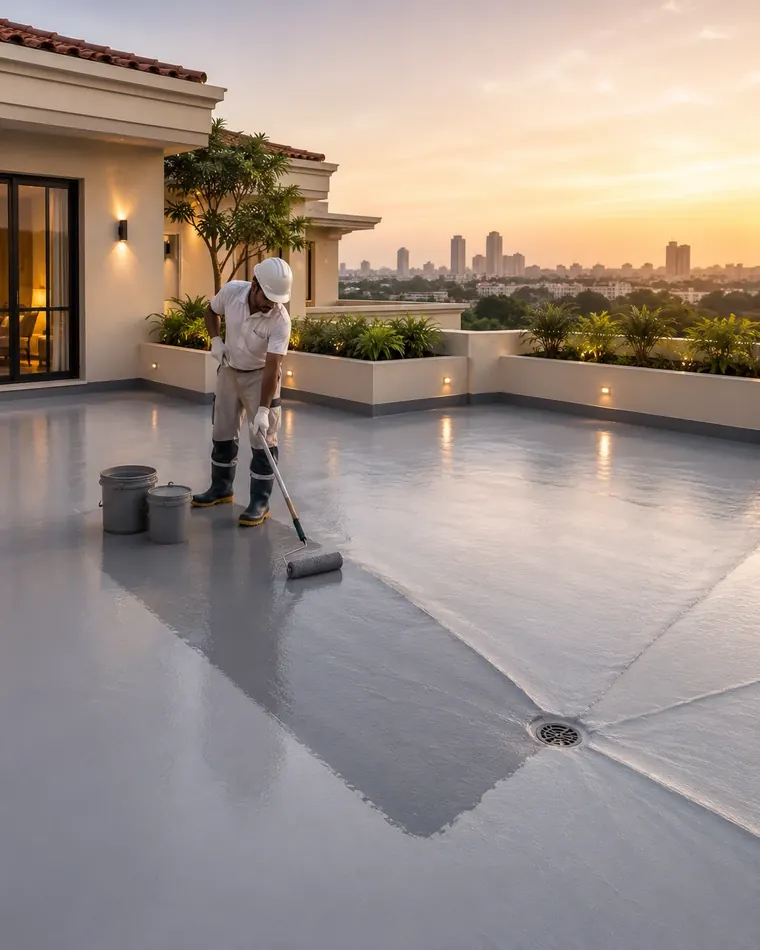
Inspection-led waterproofing services for Hyderabad terraces, damp walls, bathrooms and exterior rain entry, planned after checking the source, substrate, cracks, joints and drying conditions.
Service Overview
A damp patch is often only the visible symptom. During Hyderabad rains, water can enter through terraces, parapet joints, external cracks, wet areas or plumbing-side locations and appear elsewhere. Red Home Services checks likely source points before recommending a system, helping avoid cosmetic repairs that fail after the next rain.
We check likely seepage points instead of treating only the visible stain or damp patch.
Terraces, bathrooms, parapets and exterior walls may need different waterproofing systems.
Where dampness is active, painting should be planned after understanding the waterproofing requirement.
Rainy-Season Planning
Rain makes leakage easier to observe, but many waterproofing systems still need a prepared and suitably dry surface for application. The right next step depends on where water enters, how the surface behaves and whether the problem is rainwater, wet-area leakage or plumbing related.
We review standing-water zones, visible cracks, pipe entries, parapet junctions and old coating condition before terrace treatment is selected.
External walls are checked for cracks, open joints, weather-hit patches and failed paint before damp treatment or exterior repainting.
Bathroom moisture may come from joints, corners, plumbing or the waterproofed layer, so the source must be separated before repair.
We trace likely moisture routes before scraping or repainting, because a new paint coat cannot stop active water movement.
Material Guidance
Used when dampness is affecting exterior or interior-facing walls and the source condition has been checked.
For terrace or roof-related seepage where surface preparation, cracks, slope and exposure are important.
Used where leakage is linked to tile joints, corners, bathroom junctions or localised wet-area failure.
For moisture-hit external walls where waterproofing and exterior repainting need to be sequenced correctly.
Common Issues We Address
We inspect terrace condition, slope-related trouble areas, cracks and joints before recommending the treatment method.
Bathroom waterproofing is planned after reviewing the affected zone, tile condition, joints and surrounding dampness behaviour.
Waterproofing and painting are sequenced correctly by first checking the source of moisture and then planning repair or repainting.
We recheck the substrate and likely failure points so the next solution is based on diagnosis instead of guesswork.
How It Works
We inspect affected areas and likely source points before recommending a treatment.
Cleaning, crack treatment, weak layer removal and substrate preparation are planned.
The selected waterproofing treatment is applied with attention to joints and exposed areas.
Drying/curing needs and next-step painting guidance are reviewed before handover.
Book a Free Visit
Book a free site visit to identify the likely leakage source and get a more practical waterproofing recommendation for your Hyderabad property.
Available Across Hyderabad
We arrange waterproofing inspections across Gachibowli, Manikonda, Kokapet, Narsingi, Tellapur, Tolichowki, Bandlaguda Jagir, Lingampally, Financial District and nearby Hyderabad areas. For shared planning standards, see how we inspect and quote work.
Local Work Evidence
For completed waterproofing work, Red Home Services records the affected area and locality, visible symptoms, likely source, substrate condition, approved treatment, products, preparation, curing or testing requirements and final handover. Customer-specific records are published only after permission.
We record when and where moisture appears, terrace or wet-area details, cracks, joints, drainage, plumbing-side indicators and any previous treatment.
The approved cleaning, weak-layer removal, crack and joint treatment, waterproofing system, reinforcement and curing sequence are documented for the treated scope.
Final records cover the treated boundaries, curing or testing status, maintenance guidance, repaint timing and approved photographs or feedback where permission is available.
No customer name, exact address, private photograph, review or completion claim is published without approval. View the verified Google Business Profile and published reviews →
Frequently Asked Questions
In-depth guidance on leakage diagnosis, terraces, bathrooms, exterior walls, cracks, drainage, product systems, curing, monsoon work, testing, cost and warranty limits.
Water can travel through slabs, joints, cracks and masonry before appearing indoors, so the visible stain may be far from the entry point. A reliable solution starts by studying timing, location, nearby wet areas, terrace details, plumbing and previous repairs before selecting a system.
The inspection may cover surface cracks, old coatings, parapet-wall junctions, pipe penetrations, drain mouths, construction joints, slopes, ponding zones and the condition of protective screed or tiles. Treating only the centre of a terrace can miss the actual weak detail.
Standing water increases exposure and can exploit small defects. Waterproofing works best as part of a system that also manages slope, outlets and drainage. A coating should not be expected to compensate indefinitely for severe ponding or blocked drains.
No. Dampness may come from an exterior wall, bathroom, plumbing line, balcony, soil moisture, air-conditioning drain or internal joint. The source should be traced before deciding whether terrace treatment is relevant.
Regrouting can improve damaged tile joints, but grout is not a replacement for a failed waterproofing membrane or leaking plumbing. If leakage continues despite sound joints, the wet-area build-up, pipework and movement joints may need deeper investigation.
Waterproofing is the concealed or exposed barrier designed to control water movement through the substrate. Grout fills tile joints and contributes to hygiene and appearance. Even highly water-resistant grout should not be treated as the only waterproofing layer where a membrane is required.
A damp-proof primer may be part of a compatible system for suitable conditions, but it cannot correct every active leak. The source, substrate strength and moisture level must be considered first. Final paint should be applied only after the repair system and surface are ready.
There is no universal system. Acrylic, cementitious, polyurethane and reinforced liquid-applied systems have different substrate, exposure, traffic and detailing requirements. The terrace condition, slope, cracks, old treatment, UV exposure and future use determine the suitable approach.
Loose, blistered or incompatible layers may need removal before a new system is applied. Sound existing areas may sometimes be retained after testing and preparation. Installing a new coating over a weak or contaminated layer can cause the complete build-up to fail.
These details often need cleaning, opening or routing where appropriate, compatible fillers or sealants, reinforcement and careful integration with the main membrane. The exact treatment depends on whether the crack is static, active or structural and on the selected product system.
It depends on the product. Some cementitious systems are applied to a damp, prepared substrate, while many liquid membranes need a dry surface within specified limits. Manufacturer instructions and site moisture conditions should decide the application timing.
Inspection and emergency containment can be done during rain, but complete application needs a suitable weather and substrate window. Rain, high moisture or inadequate curing can affect adhesion and film formation. The programme should follow the selected system’s stated conditions.
Depending on the area and system, a controlled ponding or flood test may be considered after the required curing period and before finishing layers. Testing method, duration and safety must match the construction detail; it should not be improvised on a weak or occupied structure.
The schedule includes inspection, preparation, crack and detail treatment, application layers, drying or curing and sometimes testing or protective screed. A small local repair may be quick, while terrace or bathroom systems can take several staged days and may be weather-dependent.
Cost depends on affected area, accessibility, source of leakage, old treatment removal, cracks and joints, slope correction, product system, reinforcement, number of layers, curing, testing and reinstatement of plaster, tiles or paint. Area rate alone can be misleading.
No responsible contractor can guarantee every damp patch without identifying its source and limitations. Performance depends on correct diagnosis, complete detailing, substrate condition, plumbing, structural movement, drainage and maintenance. Coverage should be written for the specific treated area and system.
New plumbing leaks, structural movement, untreated adjoining areas, fresh cracks, blocked drains, damage by later contractors and water entering from outside the quoted scope are commonly excluded. Exact inclusions, inspection access and maintenance responsibilities should be written in the quotation.
Protect people, furniture and electrical points, photograph the patch, note when it starts and stops, and avoid covering it with paint. Marking the active pattern can help later diagnosis. Urgent electrical or structural risk should be handled by the appropriate specialist immediately.
Get in touch
Share where dampness or leakage appears so we can inspect the likely entry point and recommend the right treatment.
GGoogle Business ProfileLocation, reviews and business informationView profile →